
Infrastructure as Code – Automated infrastructure management via code
Infrastructure as Code (IaC) is an approach to managing and deploying IT infrastructure in which all resources such as servers, networks, storage, or platform components are not configured manually but are defined as code, versioned, and executed automatically. This makes the infrastructure reproducible, consistent, and less prone to errors.
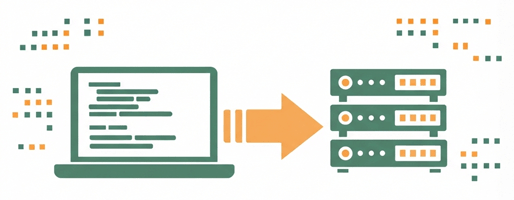
1. Introduction to Infrastructure as Code
In traditional IT operations, servers, networks, and storage are often set up “with a click” or manually. This is error-prone, time-consuming, and difficult to reproduce. Infrastructure as Code solves these problems by writing infrastructure definitions into machine-readable files or code bases and then executing them automatically.
IaC utilizes concepts from software development: version control, code reviews, reusability, and automation. The goal is a software-defined infrastructure that is reproducible, documented, and consistently deployed.
2. Why IaC is important
With the growth of cloud-based platforms, highly scalable applications, and hybrid IT landscapes, infrastructure management is also becoming increasingly complex. Manual processes quickly reach their limits here:
- high potential for errors when making changes
- No uniform deployments across environments
- Unclear documentation or missing history
- Delay in deployments
IaC provides a solution here by treating infrastructure provisioning like software code and automating it.
3. How IaC works
Infrastructure as Code is based on two concepts:
Declarative approach:
It describes the target state of the infrastructure. The IaC system automatically brings the environment to this state without specifying each individual step.
Imperative approach:
The sequence of steps required to achieve the desired state is explicitly specified. This approach is closer to traditional scripts.
In both cases, code (often in YAML, JSON, or proprietary formats) is used to define, version, and automatically roll out resources. Version control systems (Git) and automation pipelines are often used to track changes and make them reproducible.
4. Advantages of IaC
- Consistency and repeatability: Identical environments can be created as often as desired, from development to testing to production. Code ensures that every environment is set up identically, regardless of time and location. Horizontal scaling becomes a standard process.
- Documentation & traceability: All changes to the infrastructure are versioned and traceable and can be reversed if necessary.
- Automation & speed: Infrastructures can be configured and deployed in minutes instead of days. Automated deployments accelerate the entire development cycle.
- Error minimization: Manual steps are reduced, human errors are avoided.
- Cost optimization: Temporary environments can be created and deleted automatically. Resources are only provisioned when needed.
- Disaster recovery: In an emergency, the entire infrastructure can be quickly restored because all configurations are available as code.
5. Areas of application & practice
Infrastructure as Code unfolds its full potential in combination with other automation technologies. Especially in industrial and IoT environments, where data flows between different systems need to be orchestrated, IaC principles complement integration solutions perfectly.
Typical use cases
- Cloud infrastructure management: Management of virtual machines, container clusters, and cloud services via providers such as AWS, Azure, or Google Cloud.
- Container orchestration: Kubernetes clusters and Docker environments are defined and managed via IaC.
- Network configuration: Automated setup of firewalls, load balancers, and VPNs.
- Compliance and security: Enforcement of security policies through automated checks in the code.
- Multi-environment management: Consistent management of development, test, and production environments.
- Disaster recovery & testing: Complete environments can be quickly reproduced.
OPC Router as a supplement for networked infrastructure processes
OPC Router automates and standardizes the integration of different systems and protocols such as OPC UA, MQTT, REST, SQL, and SAP. Its ability to configure connections and data flows and to export and version these configurations allows integration projects to be managed according to principles similar to infrastructure as code: consistently, repeatably, and traceably.
This enables the reliable orchestration of data flows that can be linked to IaC definitions for infrastructure and automation processes. With project versioning and script control functions, OPC Router supports modern DevOps and CI/CD workflows, allowing standardized data integration scenarios to be rolled out automatically and restored as needed.
6. Challenges & limitations
Getting started with Infrastructure as Code requires new skills and changed working methods. Teams need to familiarize themselves with new tools and build up programming or scripting skills. The initial setup can be time-consuming, but it pays off in long-term efficiency gains.
Despite its advantages, IaC is not without its challenges:
- Complexity: IaC code can become complicated when modeling large environments.
- Know-how: Developers and administrators must be proficient in IaC languages and automation tools.
- Governance & Security: Automated infrastructure changes security requirements and compliance rules.
7. Frequently asked questions about IaC
- What does IaC mean?
IaC (Infrastructure as Code) means defining IT infrastructure as code and providing it automatically.
- What problems does IaC solve?
IaC reduces manual errors, ensures consistency, and speeds up deployments.
- Is IaC only for cloud environments?
No. IaC is also relevant for on-premise and hybrid architectures.
- Declarative vs. imperative – what is the difference?
Declarative describes the final state; imperative describes the exact steps.
- What do you need for IaC?
Version control, automation pipelines, and knowledge of IaC languages/tools.
- Is IaC the same as DevOps?
IaC is a building block of DevOps, not a complete DevOps approach.
8. Conclusion
Infrastructure as Code is a modern, automated approach to infrastructure management. Through coding, automation, and version control, deployment becomes more stable, faster, and less prone to errors. IaC has established itself in cloud and IT operations processes and is now a standard in DevOps organizations worldwide.
9. Technical terms explained
- Version control / Git: System for tracking and managing code changes
CI/CD (Continuous Integration/Continuous Deployment): Automated processes for integration and deployment
DevOps:Combining development and IT operations
Provisioning: Automated provisioning of IT resources
Disaster Recovery: Restoration of IT infrastructure after failures
Compliance: Compliance with guidelines and regulations
Discover other topics

YAML – What is it? Infrastructure as Code often uses YAML as a readable and structured format for defining infrastructure resources and configurations.

IT/OT integration – what is it? While IaC automatically manages the IT infrastructure, IT/OT integration enables these IT systems to be seamlessly connected to operational technology in production environments.

Docker – What is it? Container technologies such as Docker are often managed via infrastructure as code to automatically provide consistent and portable application environments.
You can find more interesting articles on Industry 4.0, the cloud, technology, alerting, practical application examples, and case studies in our Knowledge Base.